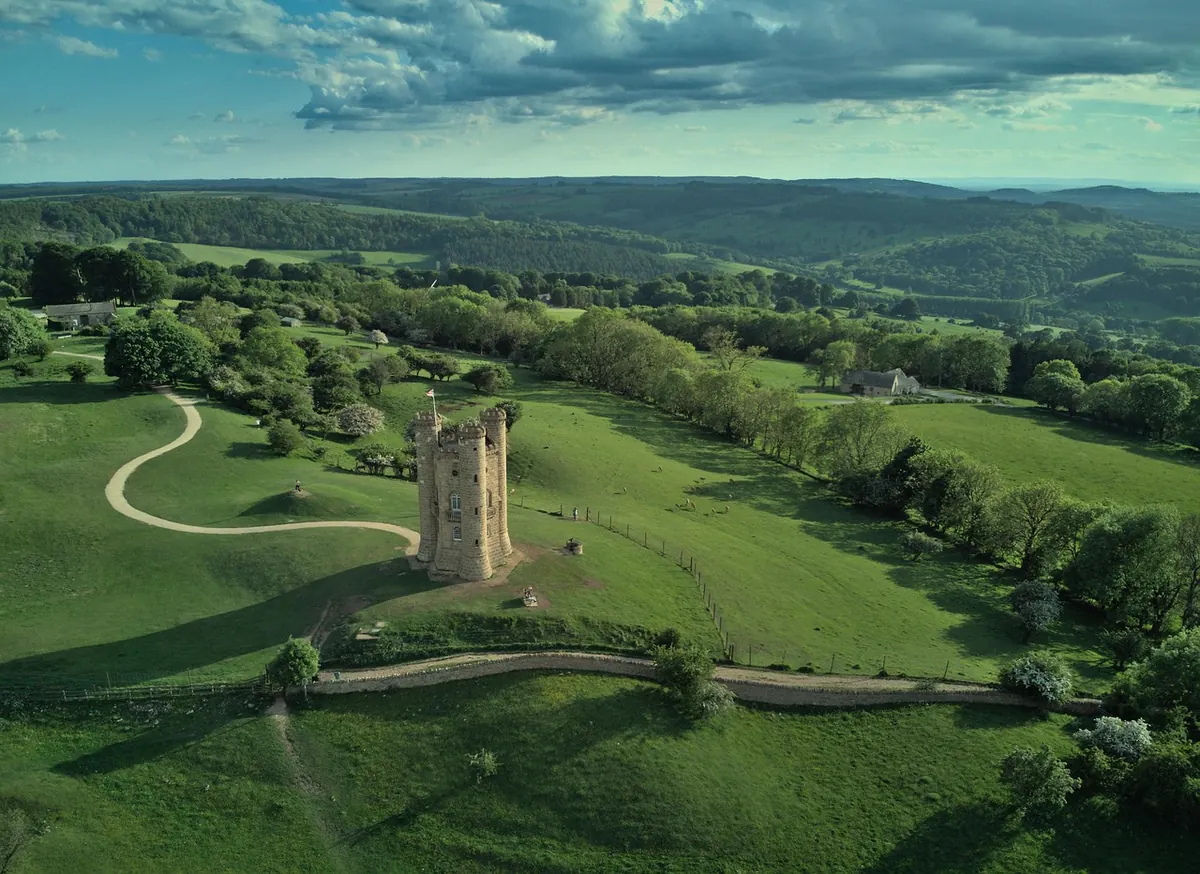
The Cotswolds can feel like one long view: drystone walls, sheep, and honey-coloured limestone. Then a gate opens and you are in a private world of yew hedges, portraits, and worn stone steps. The best historic estates here are not museums in the dusty sense. They are houses that still feel lived in, gardens shaped by weather and patience, and villages that grew up around them. What follows are the estates I would send a friend to first, with notes on how to see them without rushing.
Sudeley Castle: Tudor History and Garden Rooms
Sudeley Castle near Winchcombe is the estate that turns a casual Cotswold day into a history lesson. Katherine Parr, Henry VIII’s last queen, is buried in St Mary’s Church within the grounds, and the castle’s ruined sections give the place a melancholy beauty that the formal gardens balance out. The rooms hold Tudor and later collections, but the gardens are the reason many visitors return: clipped yew, roses, and a series of enclosed spaces that reward slow walking.
Start with the exhibition if it is open, then move into the gardens before the coach groups arrive. The church is small and often quieter in the early afternoon. Allow two to three hours, and leave time for Winchcombe itself, where the high street has good independent shops and places for lunch.
What to look for
- The tomb of Katherine Parr in St Mary’s Church
- The ruined castle walls and the contrast with the planted gardens
- Seasonal borders and the kitchen garden, which change through the year
- Events and temporary exhibitions, often included with admission
Hidcote and Kiftsgate: Two Gardens, One Afternoon
Near Chipping Campden, two gardens sit almost within sight of each other, and together they make one of the best half-days in the Cotswolds. Hidcote is the Arts and Crafts masterpiece created by Lawrence Johnston, now cared for by the National Trust. It is a garden of rooms: long borders, rare shrubs, and hedges that frame views like doorways. Kiftsgate is privately owned and feels more dramatic, sitting on the escarpment with wide views over the Vale of Evesham. The famous Kiftsgate rose is here, though it is not the only reason to come.
Check opening days before you set out. Kiftsgate has limited opening times, and Hidcote can be busy in summer. Pair the two with a stop in Chipping Campden, where the church and old market hall are worth a look. Wear shoes you do not mind getting muddy, and give each garden at least an hour and a half.
Snowshill Manor and Chastleton House: The National Trust Pair
Snowshill Manor, near Broadway, is less a traditional stately home than a cabinet of curiosities. Charles Paget Wade filled the house with clocks, toys, masks, bicycles, and objects that caught his eye, and the result is fascinating rather than tidy. The cottage garden and the view down to the village are part of the visit. Parking is limited, so use the designated car park and walk in, especially on weekends.
Chastleton House, near Moreton-in-Marsh, is the opposite experience: a Jacobean house left largely unchanged, with uneven floors, dim rooms, and a sense of family life continuing quietly for centuries. Entry is often by timed slot, and the house can only take a limited number of people at once. Both properties reward curiosity more than speed. Read the room guides, ask the volunteers questions, and do not try to see both in one morning.
Stanway, Sezincote, and Owlpen: Smaller Estates with Character
Some of the Cotswolds’ best estates are the ones that open only a few afternoons a week. Stanway House, near Broadway, has a Jacobean gatehouse and a water garden that feels like a secret. Sezincote, near Moreton-in-Marsh, is a Regency house with Indian-inspired architecture and gardens, an exotic surprise in this limestone landscape. Owlpen Manor, tucked into a wooded valley near Uley, is a Tudor house of rare atmosphere, with a garden that seems to have grown out of the hillside.
These places are not always set up for a quick drop-in. Check opening days on their own websites or with Historic Houses, and plan around them rather than assuming they will be open. Bring patience, and if a room is closed or a path is roped off, treat it as a reason to come back in another season.
Edge-of-Cotswolds Grand Houses: Blenheim, Dyrham, and Berkeley
If you have a full day and a car, three larger estates on the edges of the Cotswolds are worth the detour. Blenheim Palace at Woodstock offers Baroque architecture, parkland, and gardens on a grand scale. Dyrham Park near Bath combines a Baroque house with a deer park and formal garden. Berkeley Castle in Gloucestershire is medieval, still a family home, and full of stories that make the past feel close.
These are big sites. Book tickets in advance where possible, arrive when gates open, and wear comfortable shoes. The parkland walks can be longer than they look on a map, and weather changes quickly. A single estate can easily fill a day, so do not stack two together unless you are happy to see only the highlights.
The best visits leave room for a second cup of tea and an unplanned walk down a lane.
Practical Notes for Visiting Cotswold Estates
Opening days change with the season, and many houses close entirely in winter. Gardens often open earlier and later than interiors. Check the current details before travelling, especially if you are coming for a specific room, exhibition, or garden.
- Book ahead. Timed tickets are common at smaller houses and popular gardens, particularly in spring and summer.
- Arrive early. Parking fills up, light is better for photographs, and rooms are quieter before midday.
- Wear flat, grippy shoes. Gravel paths, stone stairs, and uneven floors are normal in historic estates.
- Ask about access. Many houses have alternative routes for wheelchairs or limited mobility, but not every historic room can be adapted.
- Check dog rules. Dogs are usually not allowed in houses or formal gardens, except assistance dogs.
- Plan food and picnics. Tea rooms and village pubs are part of the day; picnics are often allowed only in designated areas.
- Respect photography rules. Flash and tripods are often restricted indoors, and some private rooms ban photography altogether.
The Cotswolds is best seen at a slower pace. Choose two estates rather than five, leave space between them, and let the villages and lanes be part of the visit. That way, the manor houses and gardens stay memorable rather than becoming a blur of gravel paths and gift shops.
Photo: Trek_Jason / Pixabay